Written by Very N'Ice technical team · Updated October 2026
The short answer
Real ice does not need cold air; it needs a machine that removes more heat than comes in. In a warm climate more heat comes in (from the air, the sun, the ground and the skaters themselves), so the cooling plant has to be big enough and the rink must lose as little as possible. With good cover and a well-insulated system, an ice rink works in summer and in hot countries.
| Situation | Very N’Ice recommendation |
|---|---|
| Outdoors, below 18 °C | Ideal conditions |
| Outdoors, 18 to 24 °C | Viable, with the rink shielded from direct sun and wind |
| Outdoors, above 24 °C | Not recommended without cover |
| Under a marquee or indoors | No practical limit: installations at up to 42 °C |
| Outdoors in the heat with no way of covering | Find shade, move indoors or change the dates |
Where the heat that melts the ice comes from
An ice rink takes in heat from several sources at once:
- Direct sun: the heaviest load outdoors. A rink in the sun may need far more cooling than the same rink in the shade at the same air temperature.
- Warm air and wind: wind replaces the air over the ice and increases heat exchange.
- Humidity: water vapour condenses and freezes on the ice, and that is also heat the plant has to remove.
- Ground: if the rink sits directly on the ground, cold escapes downwards.
- Use: skaters, lighting and maintenance flooding.
That is why the thermometer alone is not enough. A rink in the sun at moderate temperatures can suffer more than one in greater heat under a good marquee.
The marquee: the most important decision
If the rink has to work in hot weather, the cover matters more than any other decision. A marquee:
- Blocks direct sun, the biggest heat load.
- Stops wind and rain.
- Keeps the rink open every day, including during summer storms.
- Reduces chiller consumption.
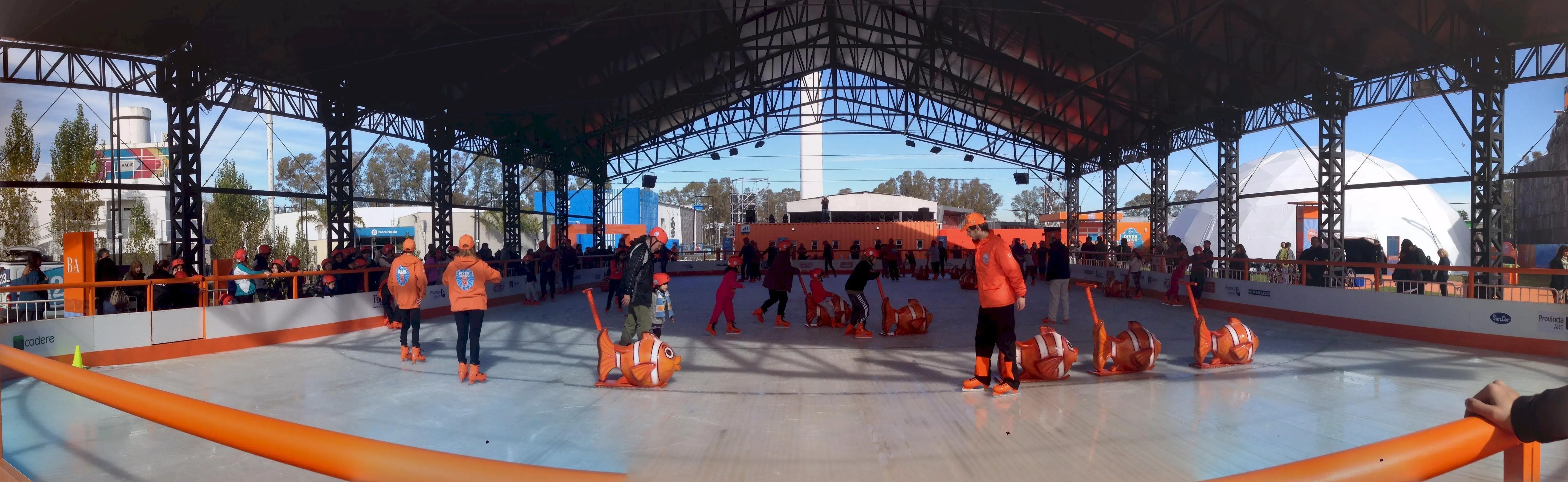
Choose a cover that gives real shade over the whole ice surface and lets people see the rink from outside. An opaque, closed canvas keeps visitors away. If the rink is in a shopping centre or a sports hall, the building acts as the marquee: the easiest situation in warm climates.
In covered installations, whether a marquee or an enclosed building, Very N’Ice has worked without difficulty at ambient temperatures of up to 42 °C.
Why the cooling system matters more in the heat
In hot weather every loss in the system is multiplied. Our freezing system is designed to lose as little as possible:
| Element | Very N’Ice system | Typical systems |
|---|---|---|
| Cooling floor base | Thermal insulating board: cold goes into the ice, not the ground | Laid directly on the ground |
| Manifolds | Inside the ice itself, producing cold | In a header outside the rink, freezing the air |
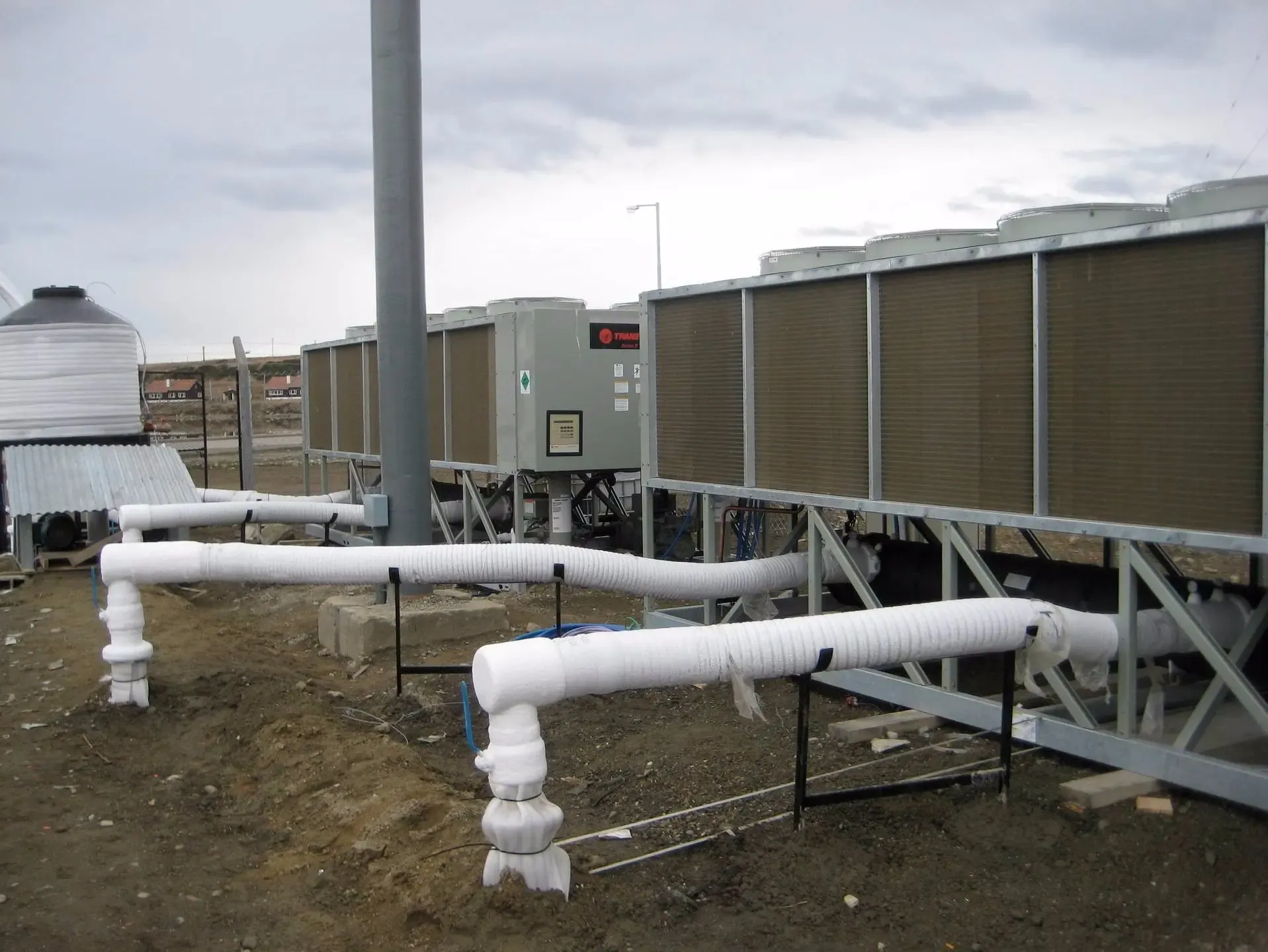
| Pipes to the plant | Thermally insulated | Often uninsulated, with ice building up on them |
| Rink pipework | Tempered aluminium with 2 mm walls | Rubber (EPDM) in many cases |
| Chiller flow and return temperature difference | Less than 1 °C | 3 to 5 °C (Very N’Ice figure) |
Our rinks also let no water escape outside the barriers and cause no condensation underneath. In a hot, humid climate this prevents puddles around the rink.
Energy use in the heat
With more heat the chiller runs longer and consumption rises. There is no single figure: it depends on temperature, sun, humidity and whether the rink is covered. As a general reference, our calculator uses an average of 3 kWh per m² per day; for an outdoor rink in a warm climate it is wise to be more cautious and calculate higher.
Very N’Ice states consumption at least 40% lower than traditional systems thanks to the insulation described above. More detail in our guide to ice rink energy consumption.
Practical tips for a summer rink
- Cover the rink or install it indoors. It is the measure that works best.
- Place the plant close to the rink, so pipes are short. If it has to be further away, we reinforce the insulation.
- Do not switch the plant off at night: the pump runs continuously and the chiller regulates itself.
- Keep the ice thin: clearing snow and flooding with a very thin layer stops the ice thickening and making the plant work harder.
- Open during the cooler hours if the rink is outdoors: evening and night.
- Plan for power cuts: the ice starts to get wet after about 3 hours without power in normal conditions, and sooner in the heat.
Examples in warm places
Very N’Ice has installed ice rinks and attractions in cities with warm or mild climates, including:
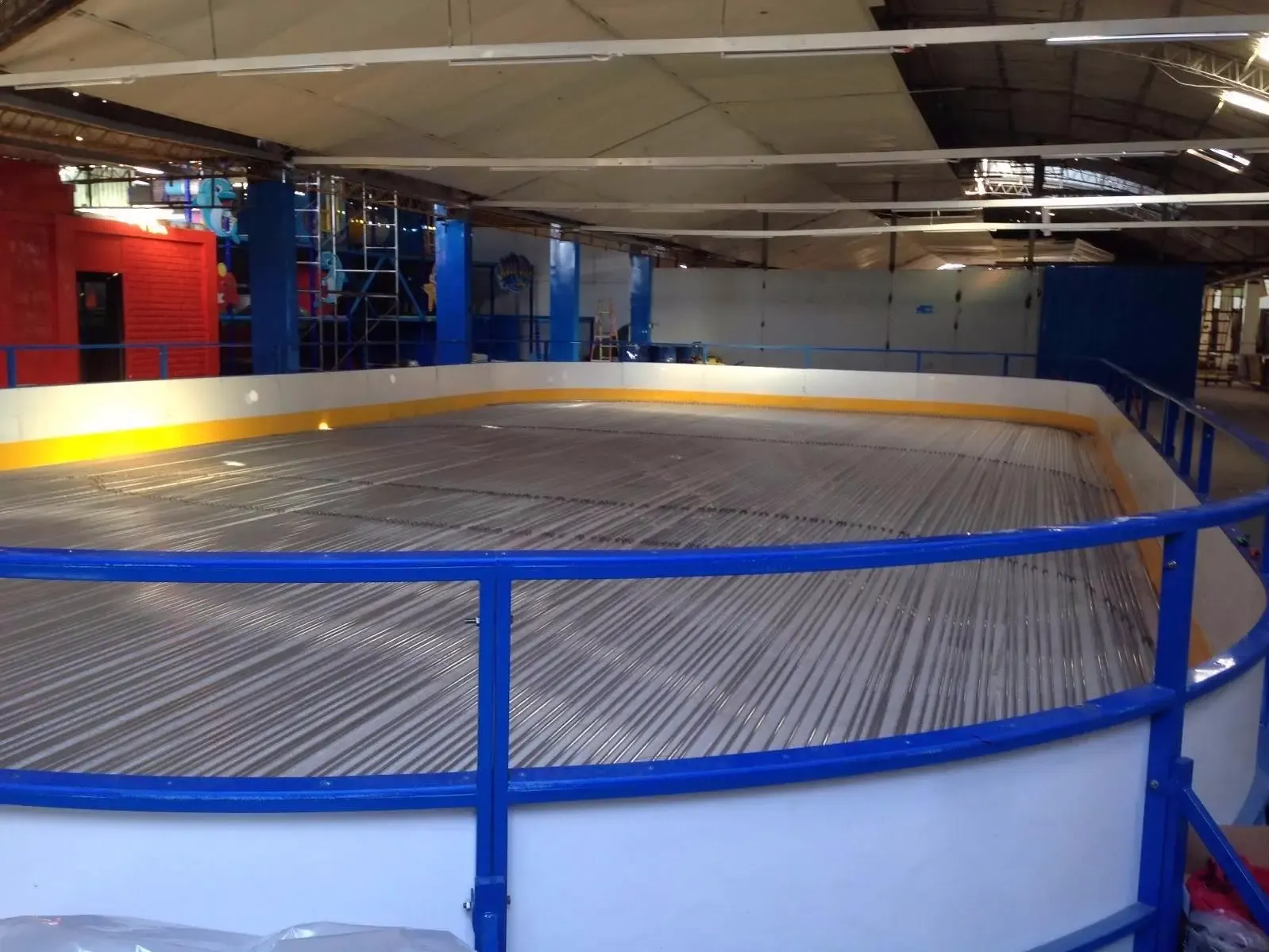
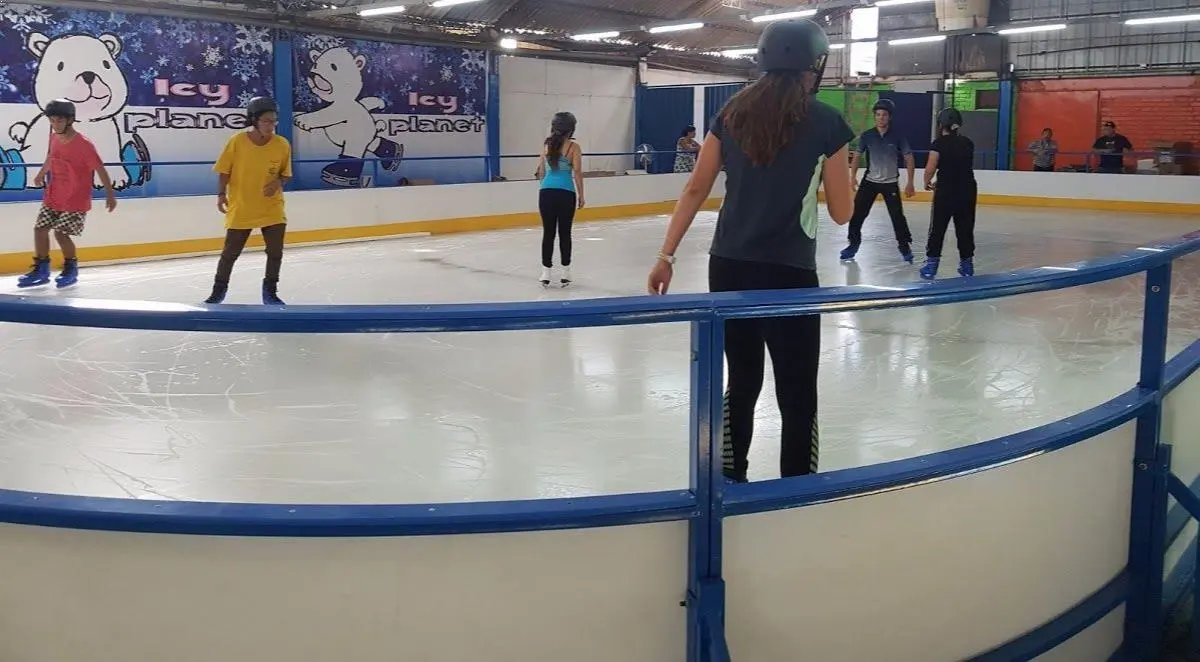
- Arica (Chile): Icy Planet indoor ice rink.
- Guadalajara (Mexico): 600-metre ice trail at Navidalia, December 2019. We describe it in what is an ice trail.
- Southern Spain: rinks in Seville, Cádiz, Huelva and Fuerteventura, among others.
See more in our projects.
If the rink cannot be covered
We only work with real ice. If the rink will be outdoors, above 24 °C and with no chance of covering it, we will tell you plainly: it is better to find a shaded site, set it up indoors or choose cooler dates. Check the site’s technical requirements before deciding.
Tell us the location, dates and whether there will be cover, and we will tell you which solution works in your climate. Request a quote.