What a professional rink requires
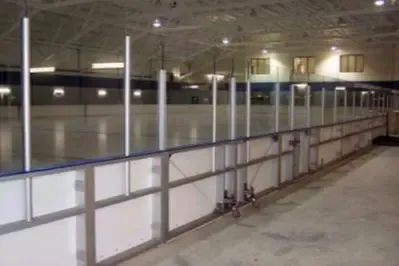
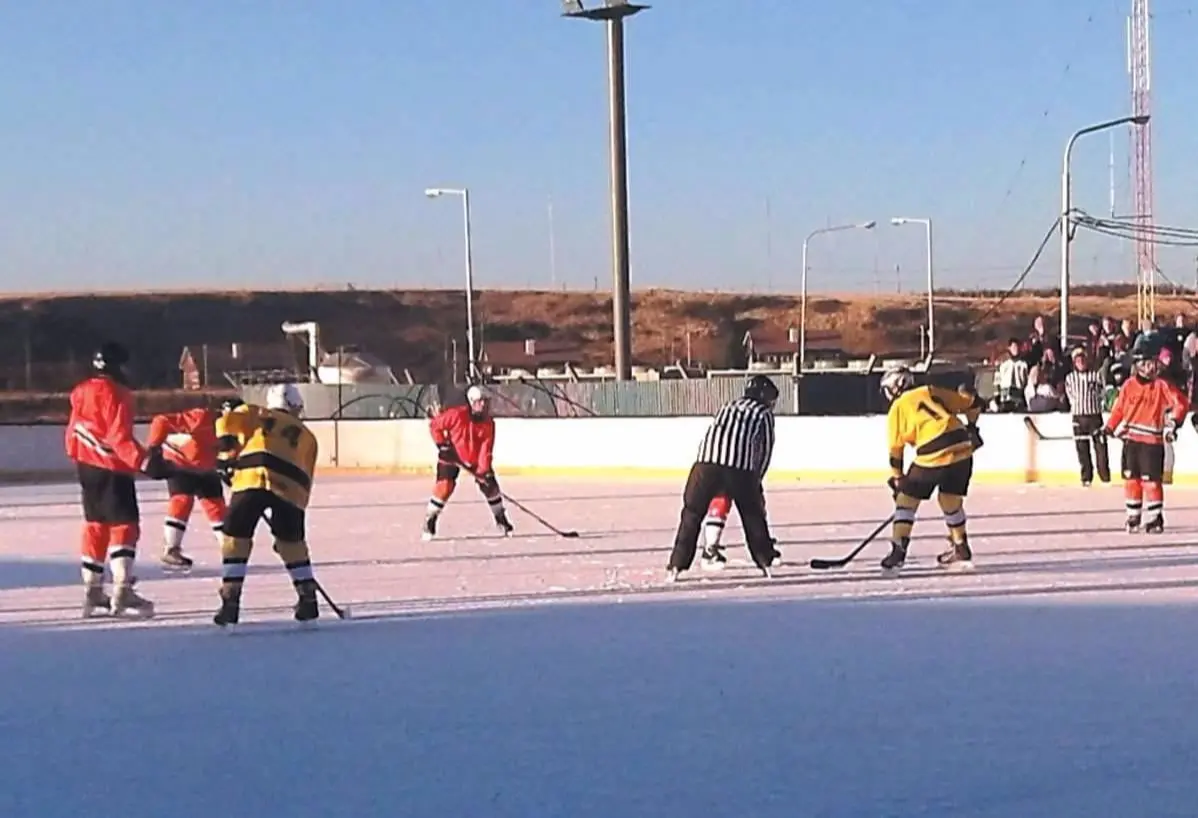
A professional rink differs from a leisure rink in three ways: its size, the quality and consistency of the ice, and the machinery’s ability to maintain that ice under heavy use. Hockey, figure skating and speed skating are much harder on the surface than a public skating session.
That is why we calculate each professional rink as a whole: hydraulics, chiller, pumps, cooling floor and insulation. Everything is manufactured for that specific rink.
Dimensions and regulations
We follow the rules, dimensions and parameters of the International Ice Hockey Federation (IIHF). Our reference size is 30 x 60 m, about 1,800 m². Meeting these rules makes it easier to get the facility approved for competition.
Not every sports rink needs that much surface. As a guide:
| Use | Guide surface |
|---|---|
| Training, skating school and shows | from 450 m² |
| Medium sports rink | 800 to 1,000 m² |
| Professional hockey rink | 1,800 m² (30 x 60 m) |
If you are unsure what surface will fit in your arena, see our page on ice rink sizes or send us the drawings.
A fixed rink for heavy use
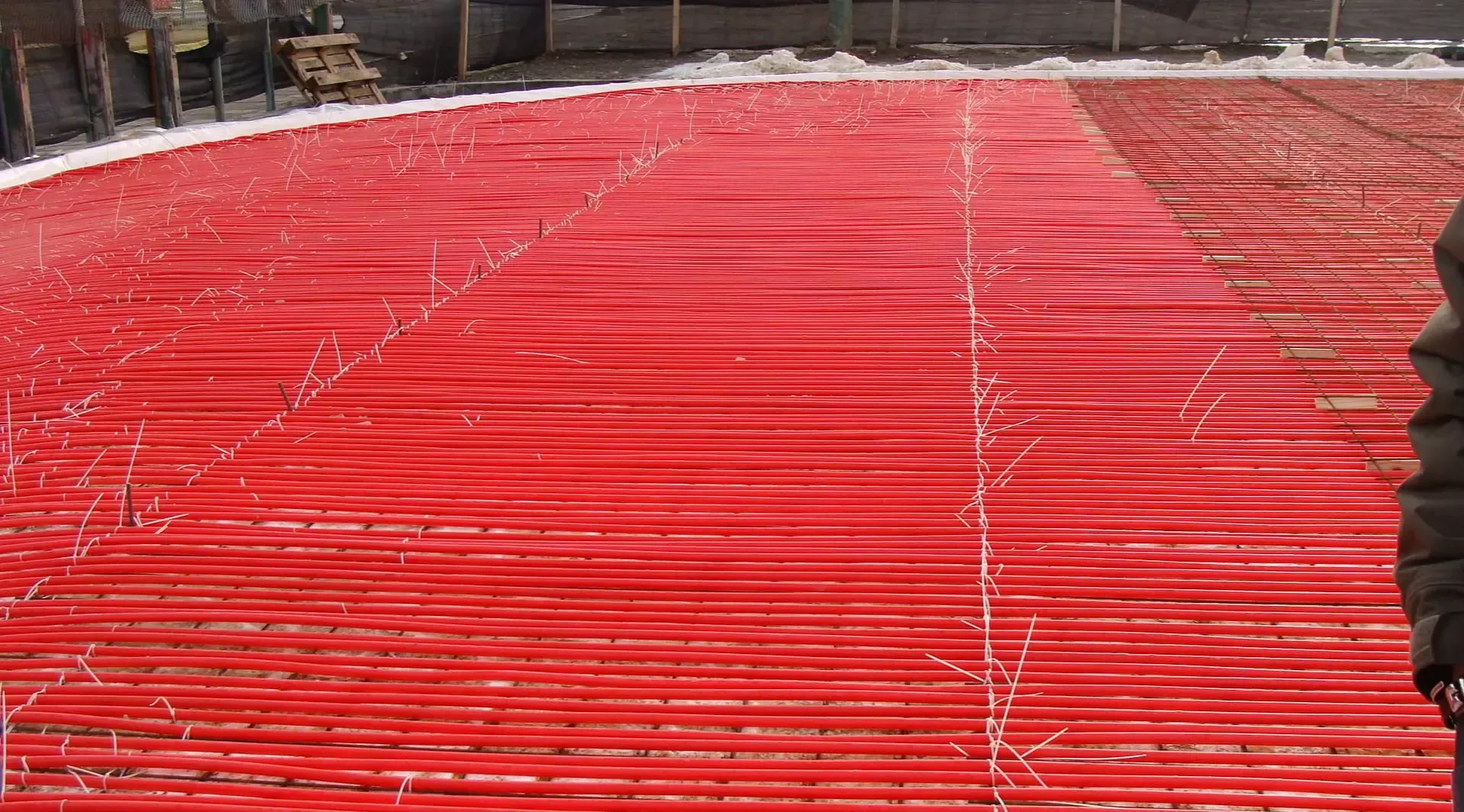
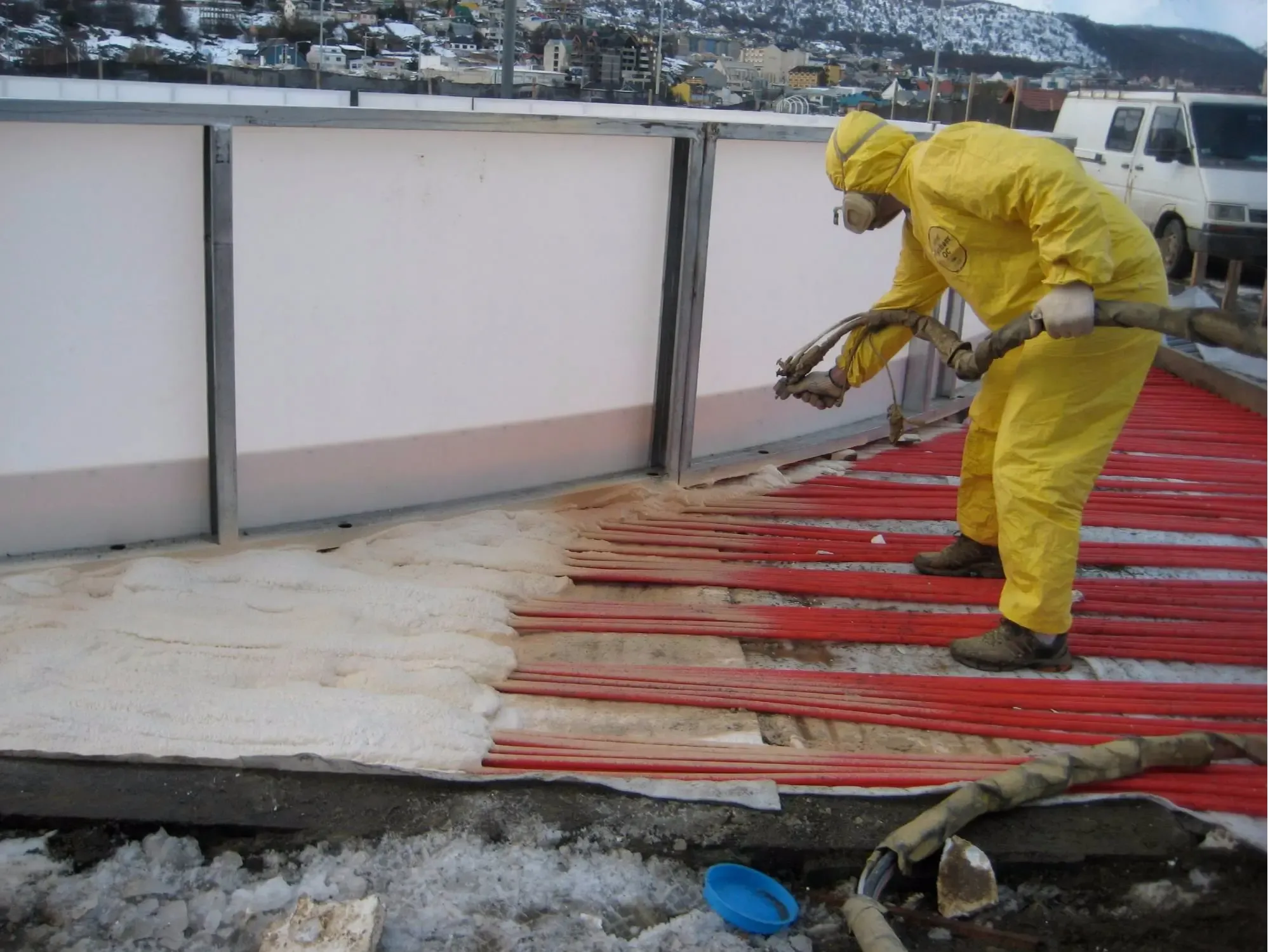
Most professional rinks are fixed: the cooling floor pipework is covered by a layer of special concrete. Installation can take up to 30 days, plus curing time. If sand is used instead of concrete, there is no curing time to wait for.
Under the cooling floor we lay an insulating board, so the cold goes upwards and is not wasted freezing the ground. All the pipework is 2 mm wall tempered aluminium, and the manifolds sit inside the ice. More detail on our freezing system.
Chiller and pumps
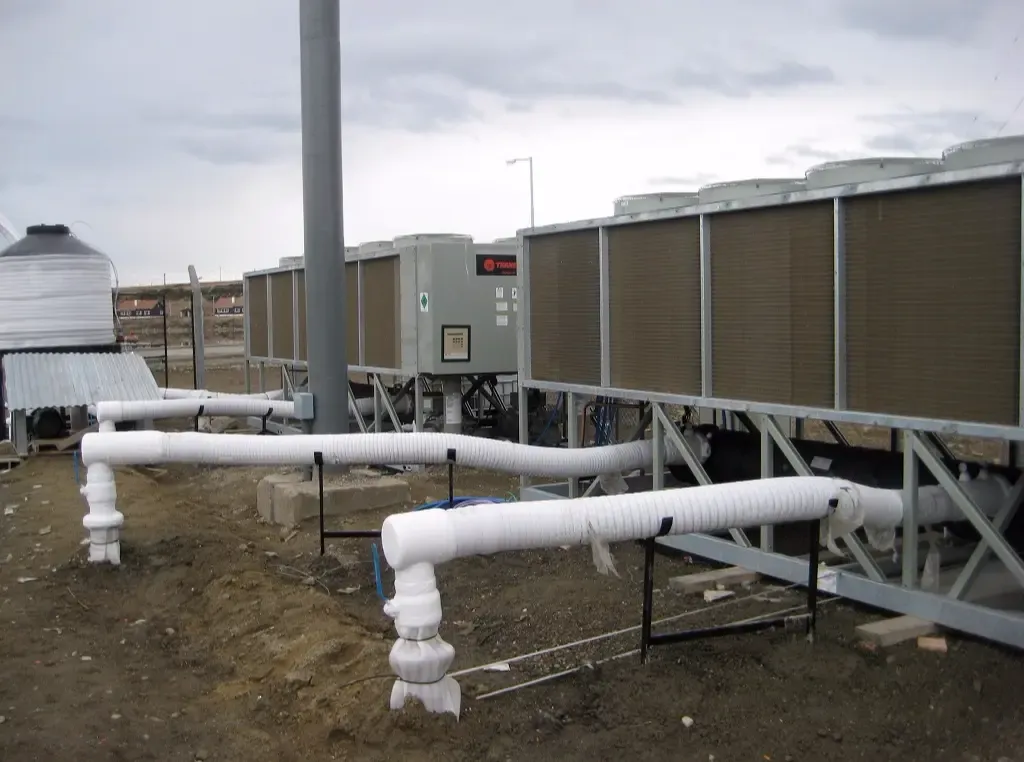
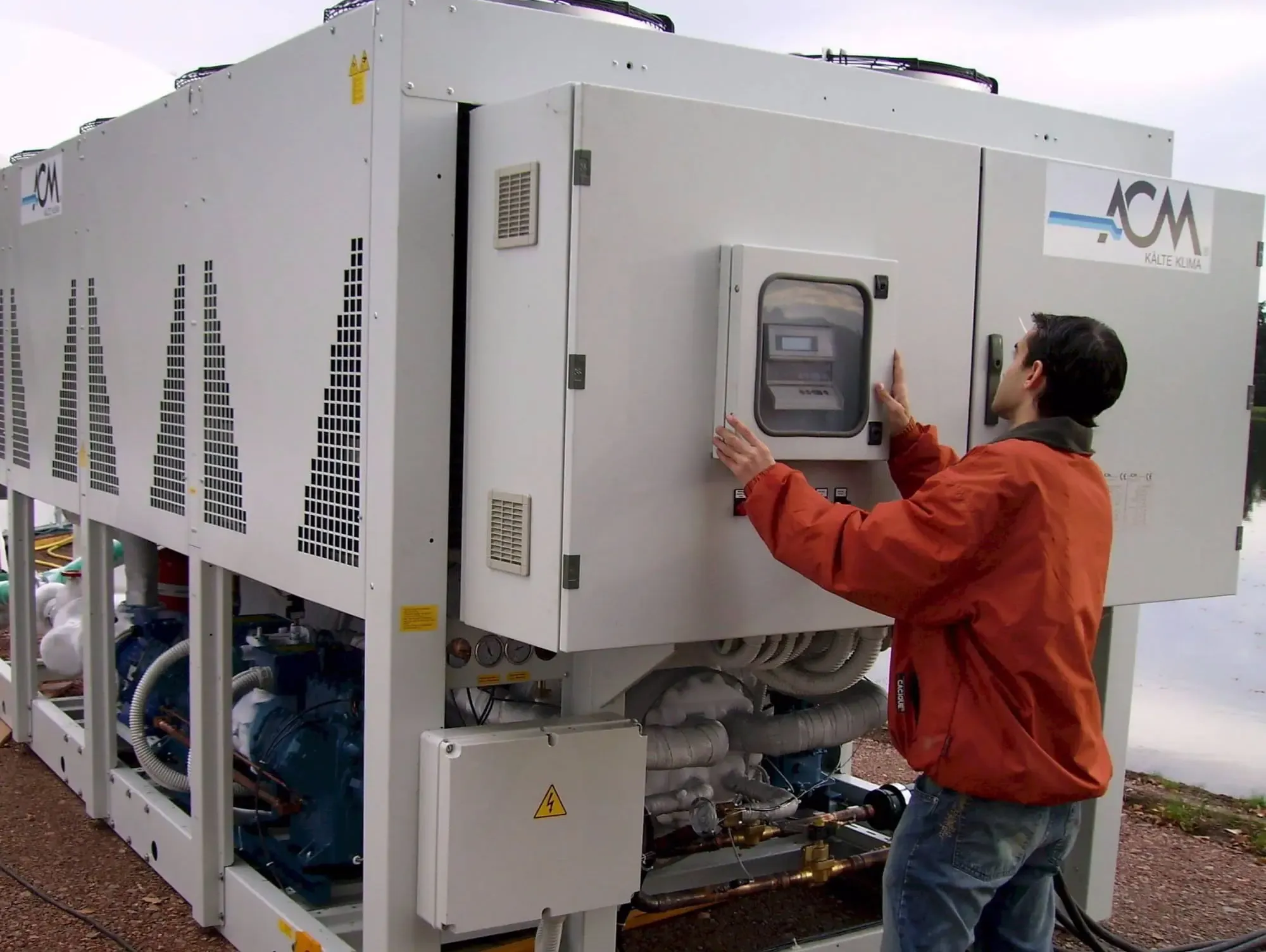
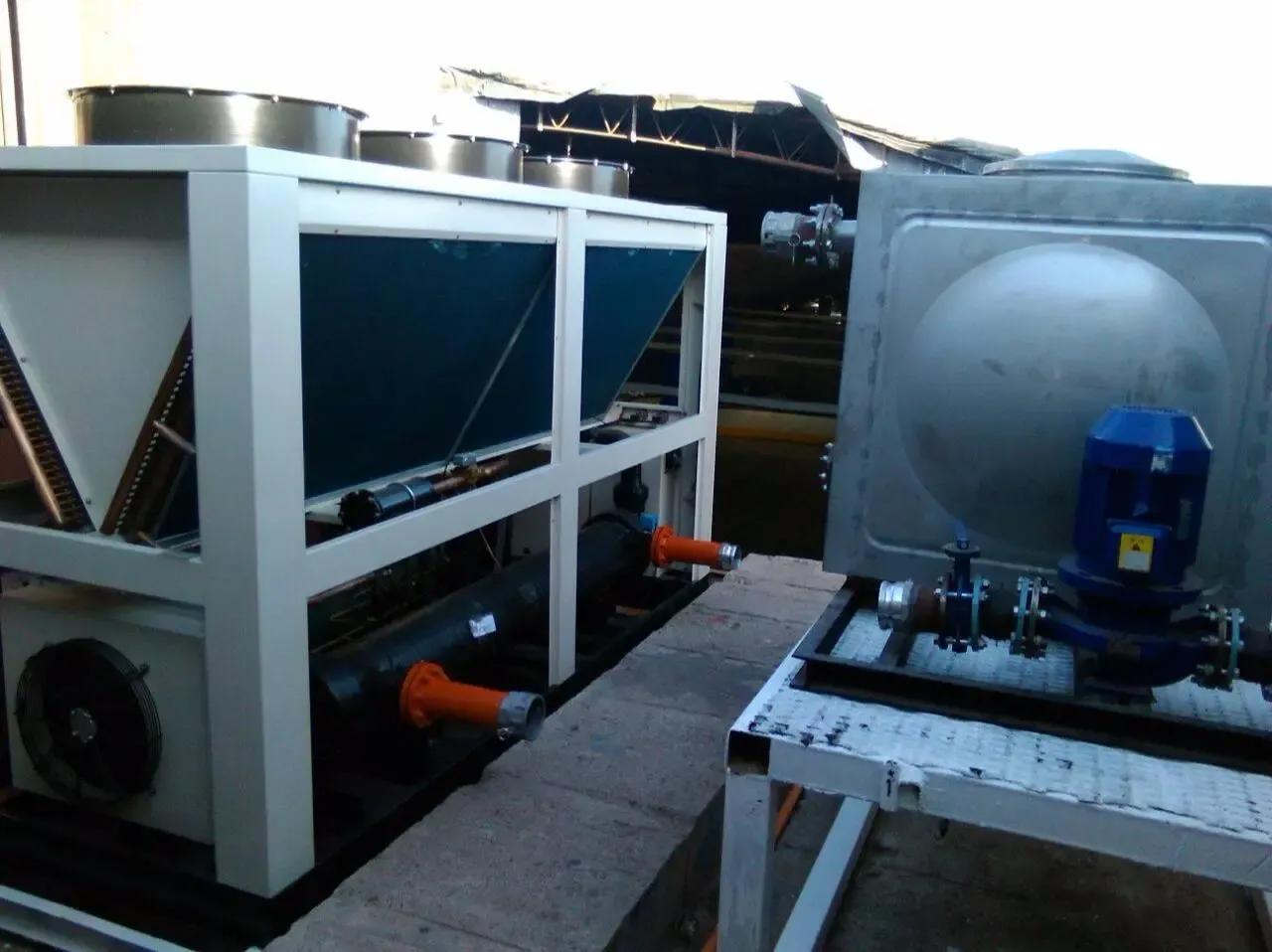
We build our own ice rink chillers in three models (VN060, VN125 and VN180). This range covers every size, up to a professional rink. We do not use adapted air conditioning units.
Each installation has two computer-controlled hydraulic pumps that alternate to spread the wear. If one fails, the other keeps running and the rink does not stop. The chiller sits on an anti-vibration system that protects it from vibrations in the circulating liquid. The circuit coolant is propylene glycol. See ice rink machinery.
Our system keeps the difference between chiller inlet and outlet below 1 °C, compared with 3 to 5 °C for conventional systems. On a 1,800 m² rink open many hours a day, that difference shows on the electricity bill. We declare an energy saving of over 40%.
Outdoors or in an arena
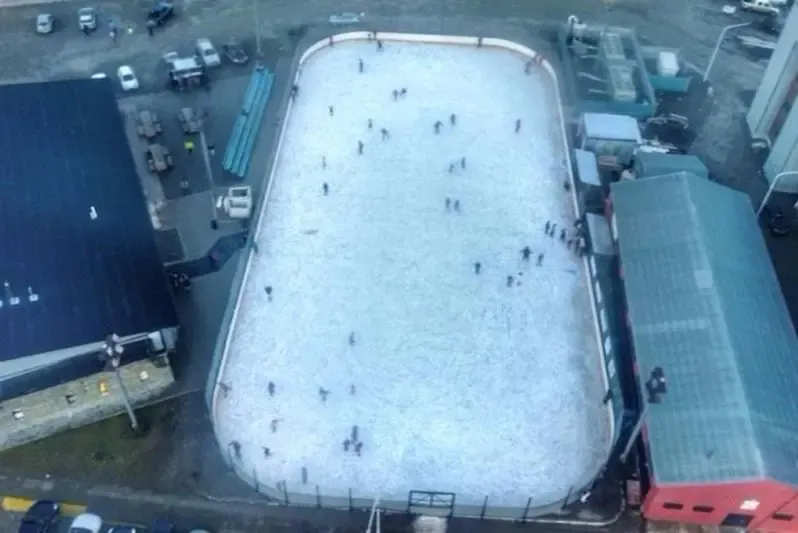
A professional rink can go in an arena, a stadium or outdoors if the climate is suitable. Outdoors we recommend shielding it from sun and wind and keeping it below 24 °C. In an enclosed building, the outside temperature is no longer a limit.
Ice maintenance
A rink of this size needs a professional ice resurfacer, able to clear the snow from the whole surface and lay a thin film of hot water between sessions. The edges along the boards are trimmed with a dedicated edger. We can advise you on the right machine on our ice maintenance page.
The chiller needs a service every 6 months and, every 3 to 5 years, an inspection of the hydraulic connections. We hand over all the manuals and train your technical team.
How we run a professional project
- Review of the arena or site drawings, access and utility connections.
- Hydraulic calculation and choice of chiller.
- Manufacturing, 12 to 14 weeks.
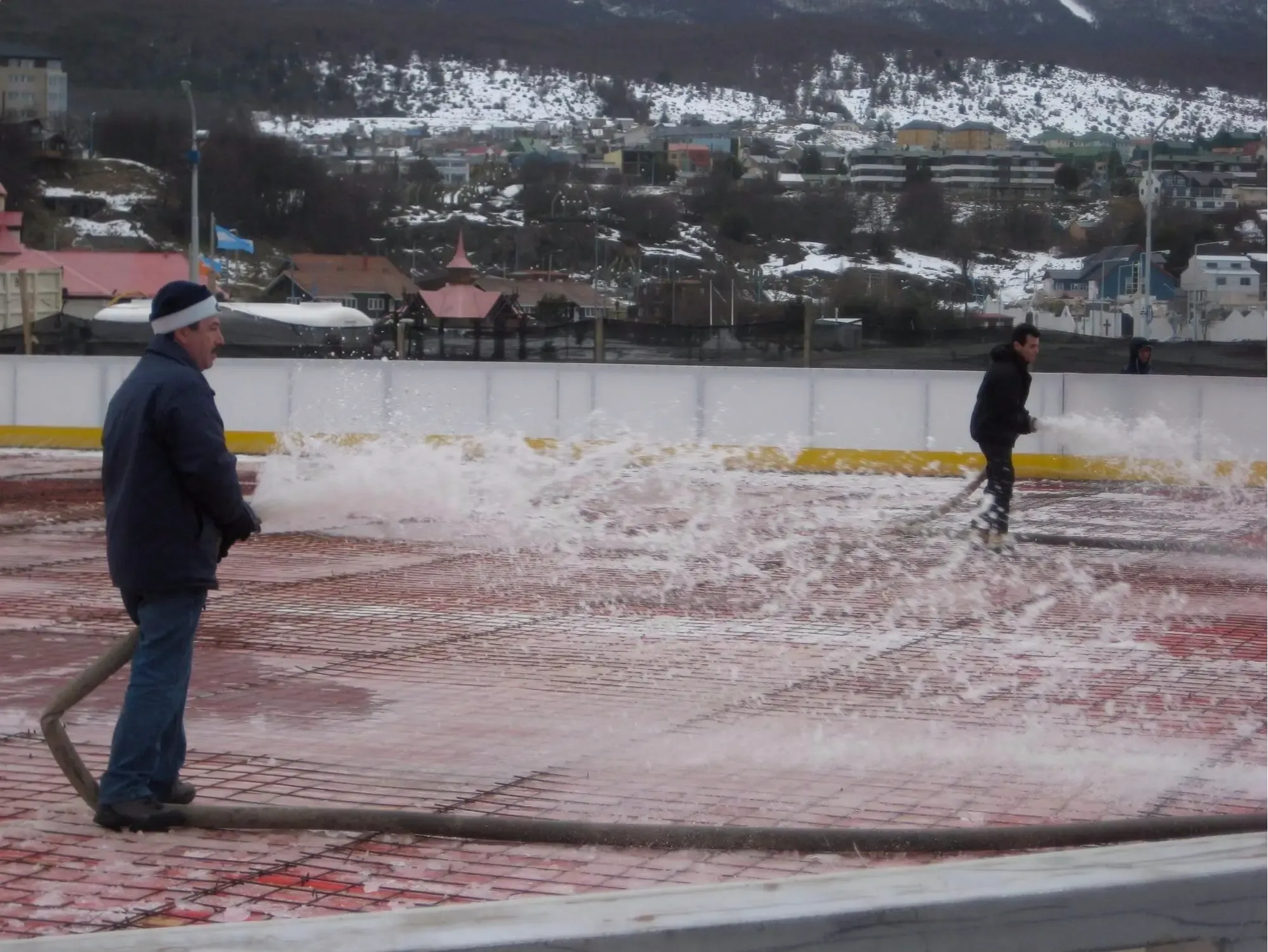
- Installation, insulation, concrete pour and ice formation.
- Commissioning and staff training.
See the purchase terms on ice rinks for sale or send us your project via our quote form.