The chiller is the heart of the rink
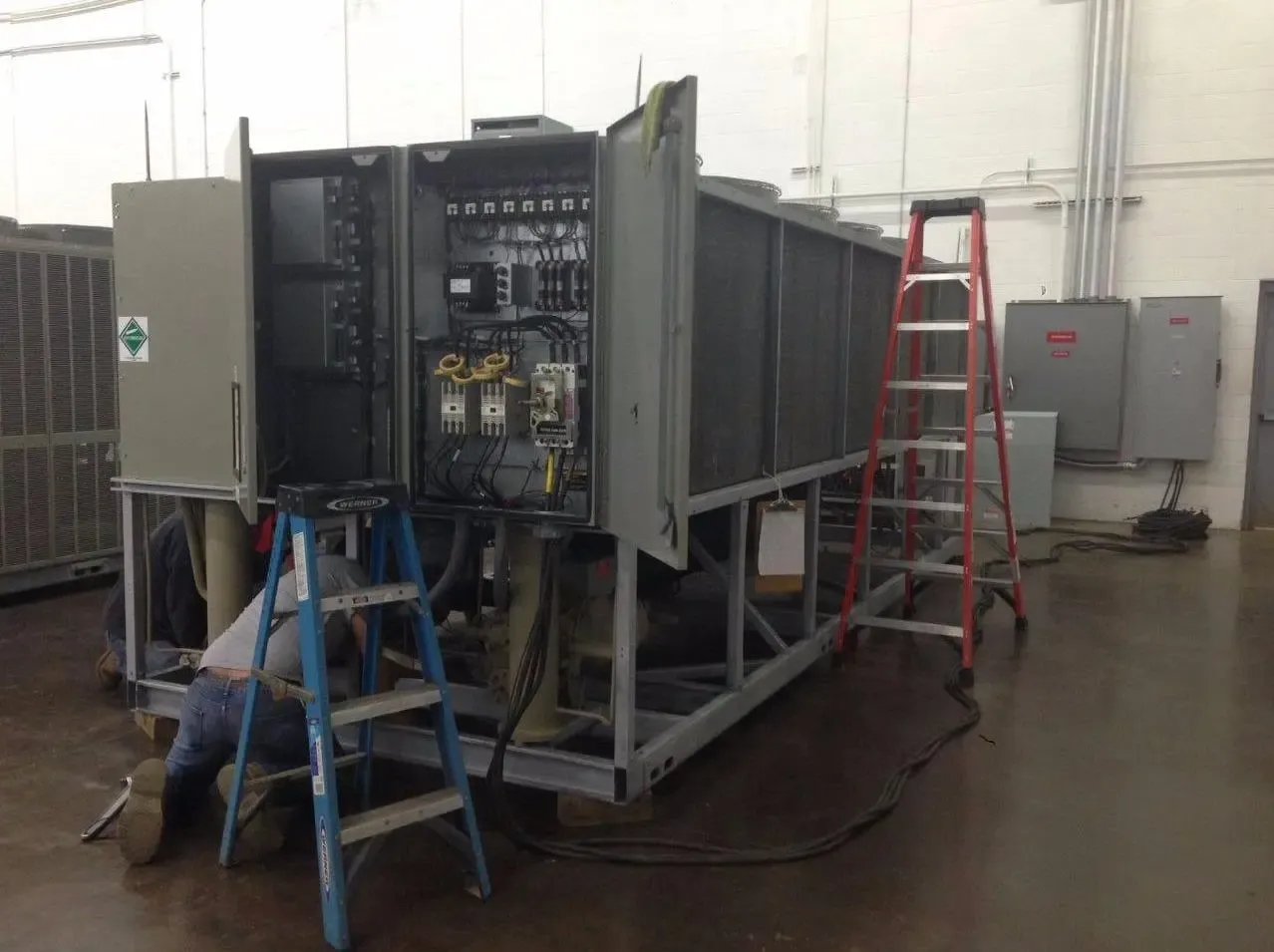
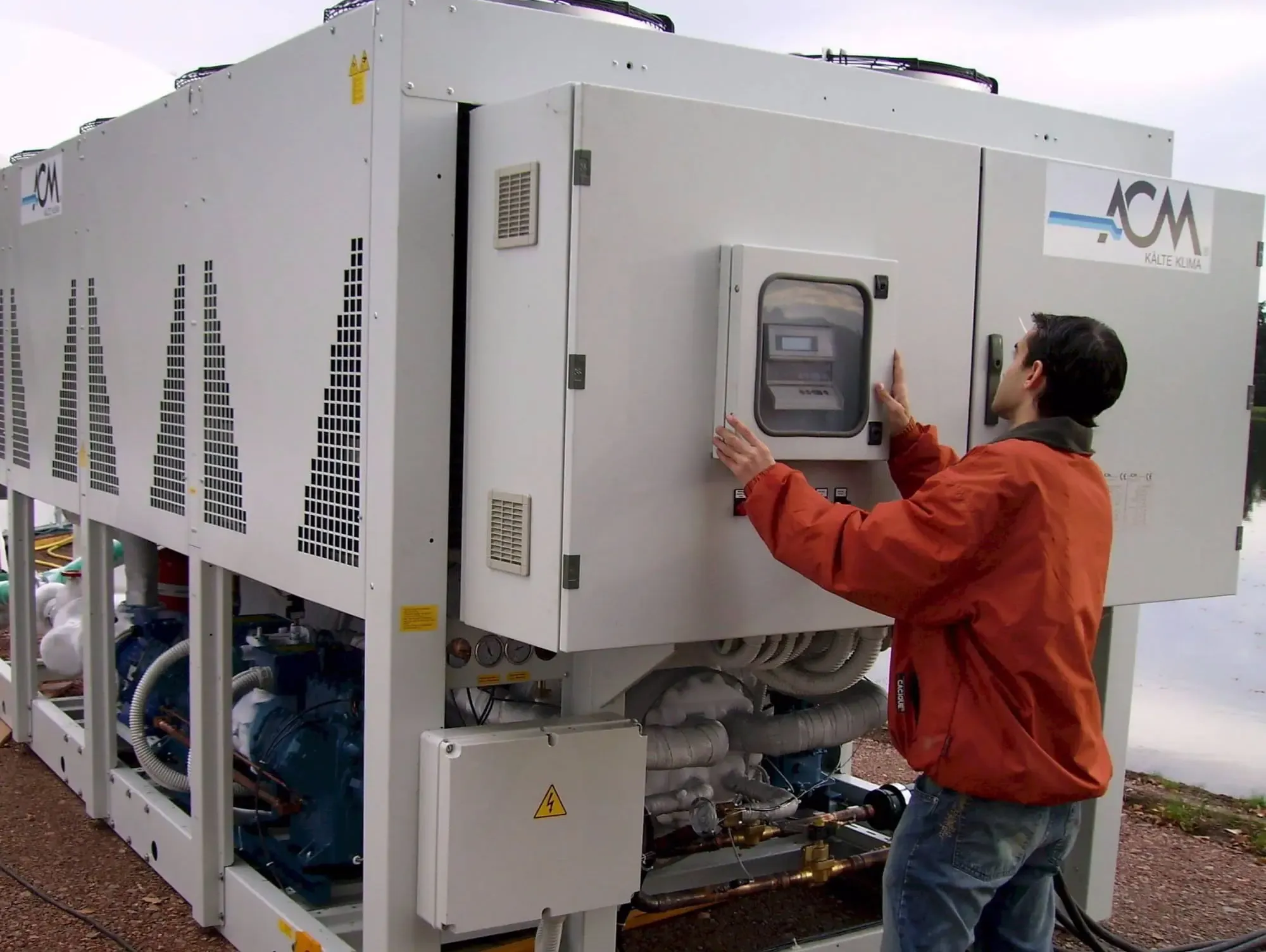
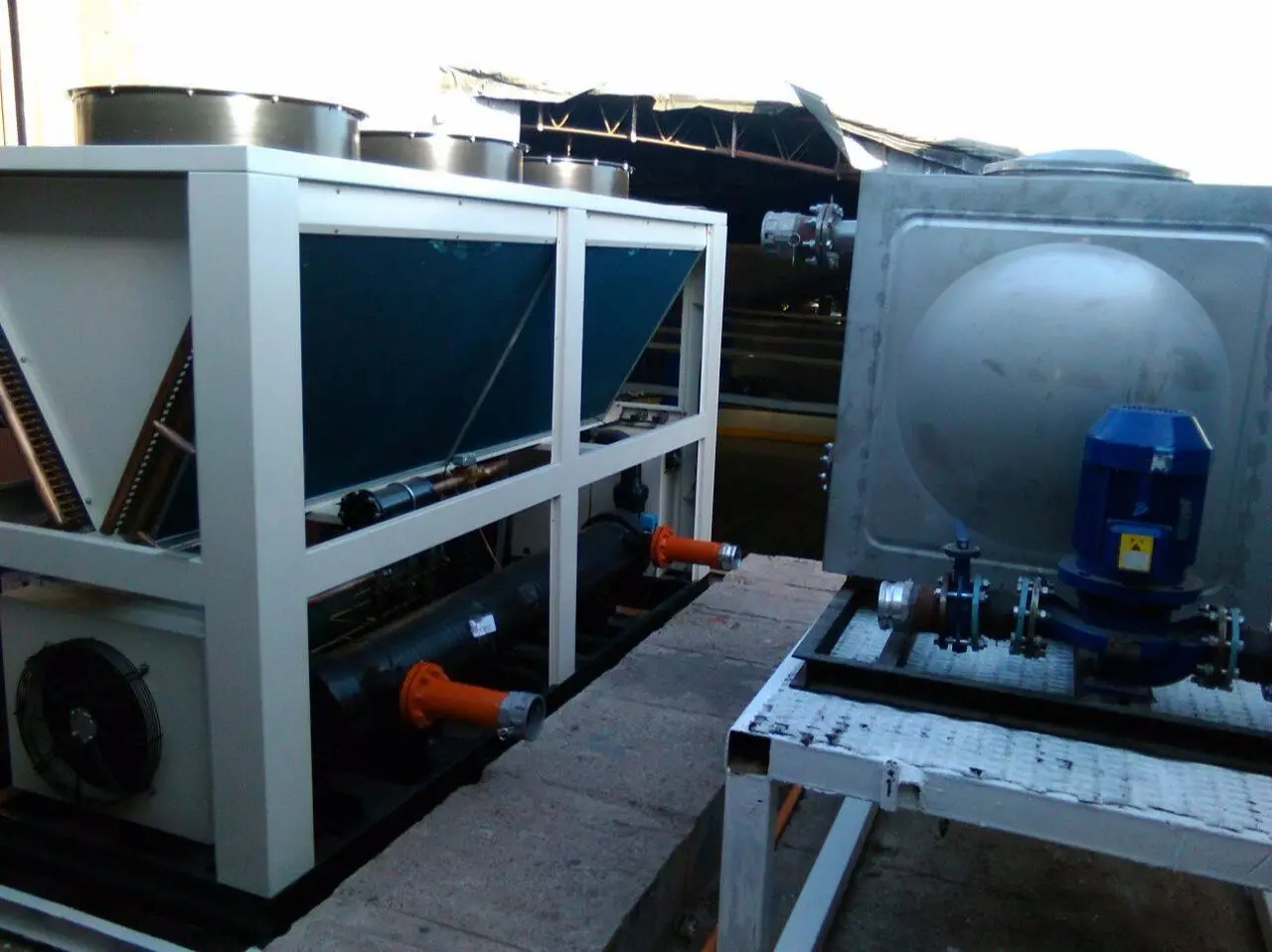
The chiller, together with one or two hydraulic pumps, is what keeps the ice frozen. It cools the liquid that circulates through the pipes of the cooling floor, and both the quality of the ice and the electricity bill depend on it.
Every installation is different. The location, the ambient temperature, the size of the rink and whether it is outdoors or covered decide what equipment is needed. That is why we calculate each case and build the chiller for it.
Why we build our own chillers
Many installations use air conditioning units adapted to a job they were never designed for, and because the full calculation is not done, an oversized machine gets installed. Sometimes it works and often it does not, but power consumption is always excessive.
We design and build chillers specifically for ice rinks, in three models for different rink sizes: VN060, VN125 and VN180. This range covers every rink size, up to professional ice rinks. The result is smaller, quieter and more efficient equipment, with a declared energy saving of over 40%.
Details that extend the life of the equipment
- Anti-vibration system. Stops vibrations from the liquid circulating through the cooling floor from reaching the chiller.
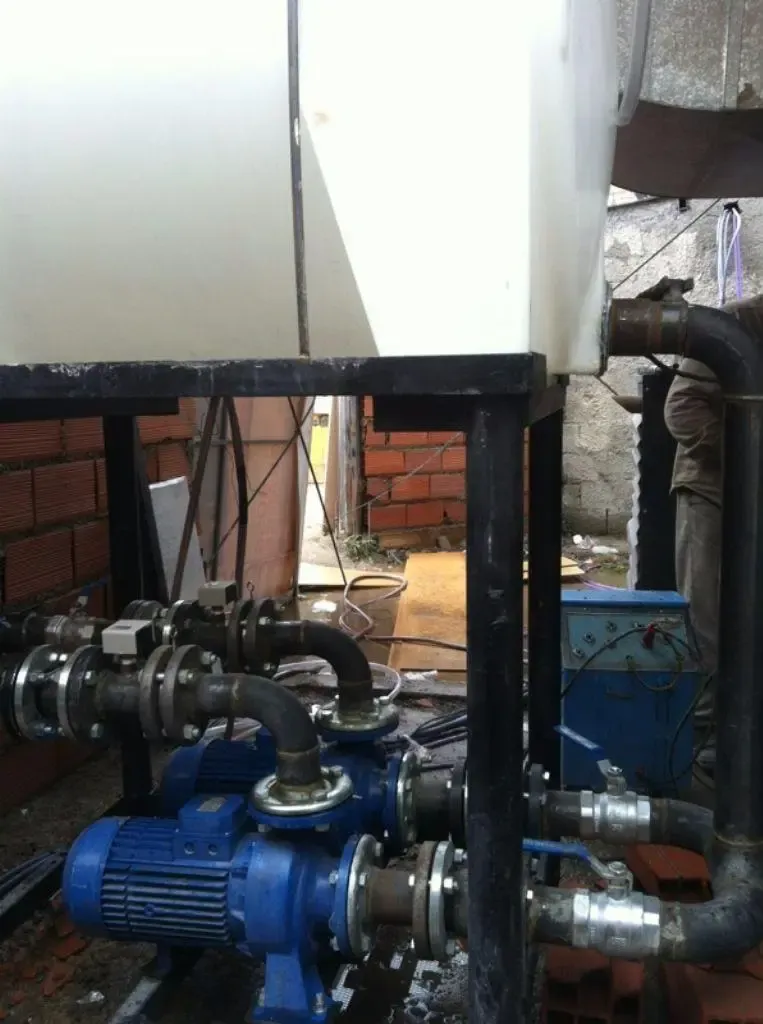
- Two automated pumps. A computer alternates between them to spread the wear. If one fails, the other keeps running: the chiller is not damaged and the rink does not stop.
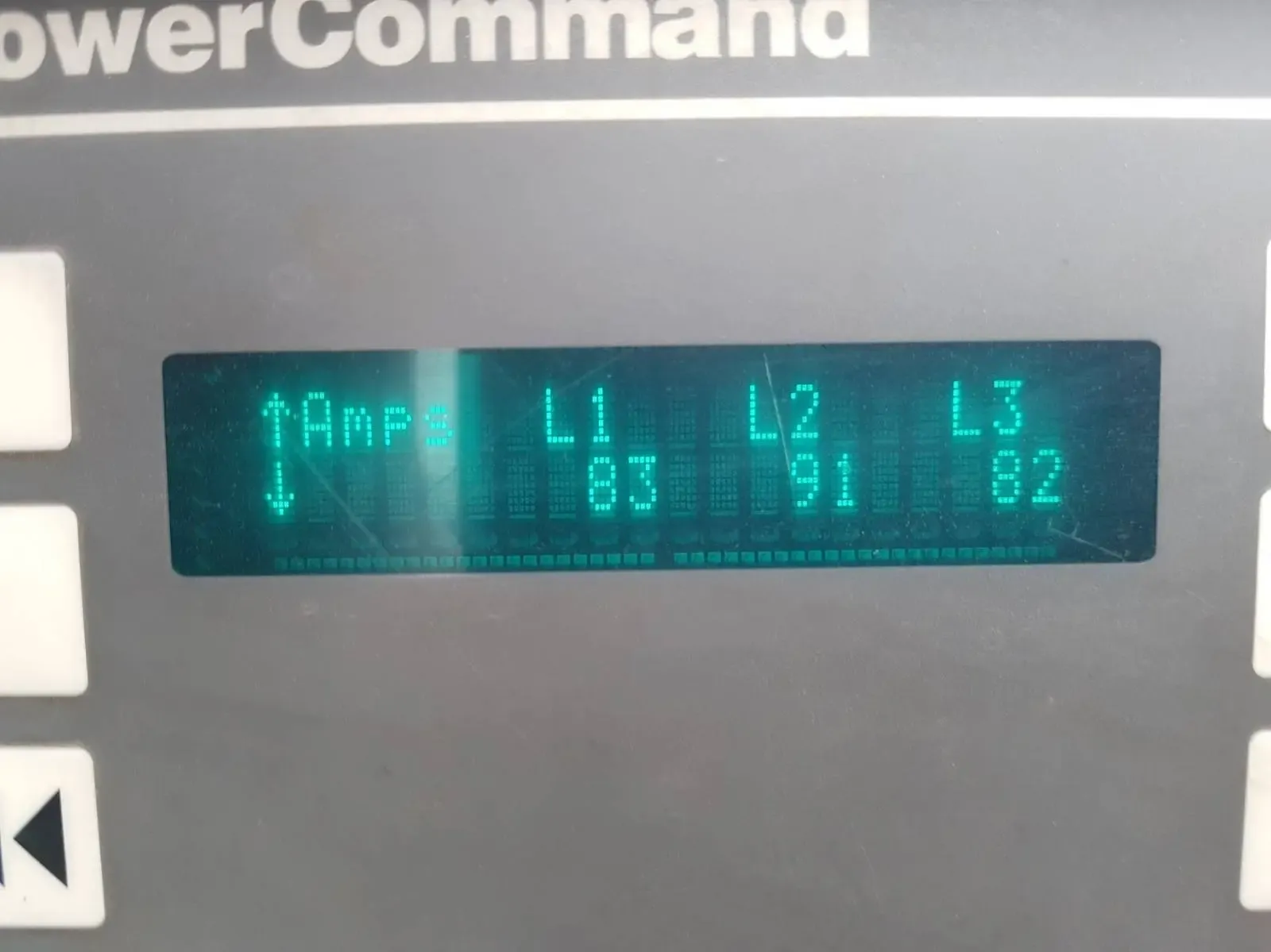
- Electronic control. The unit adjusts the temperature so the ice stays in good condition even in warm weather or with lots of skaters.
Propylene glycol and an efficient circuit
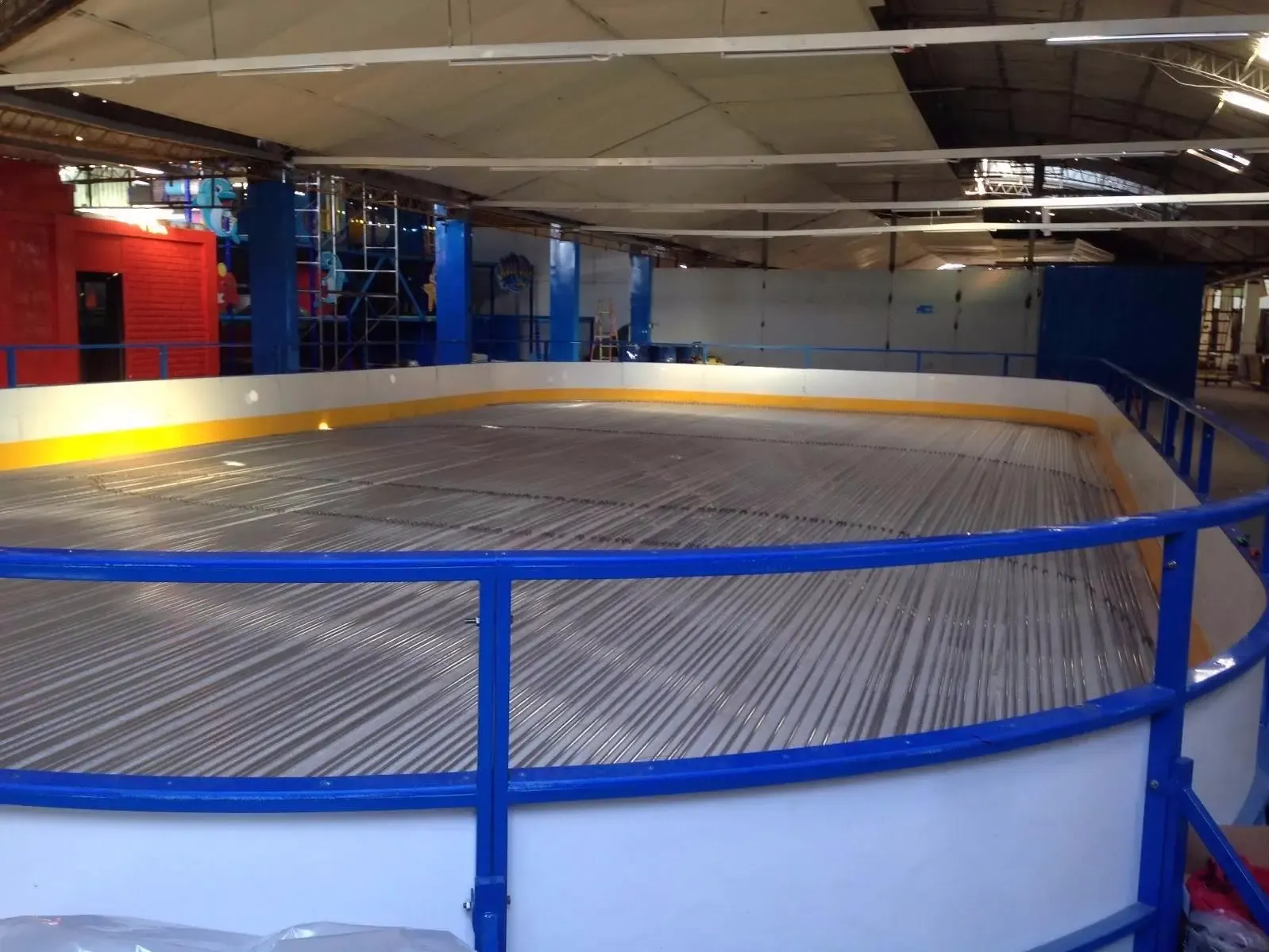
The rink circuit runs on propylene glycol, a food-grade, environmentally friendly coolant, instead of the cheaper ethylene glycol most systems use. The floor pipes are 2 mm tempered aluminium, with the manifolds inside the ice and double insulation. As a result, the temperature difference between the chiller inlet and outlet is less than 1 °C, while other systems lose 3 to 5 °C. We explain it in detail on our freezing system page.
Operating temperatures
| Location | Recommendation |
|---|---|
| Outdoors | Shielded from direct sun and wind; ideally below 18 °C and no higher than 24 °C |
| Under a marquee or indoors | No practical limit; we have installed rinks in temperatures of up to 42 °C |
If the rink is outdoors and exposed, the chiller works harder and consumption rises. For hot climates, see our guide to ice rinks in warm climates.
Installation and space
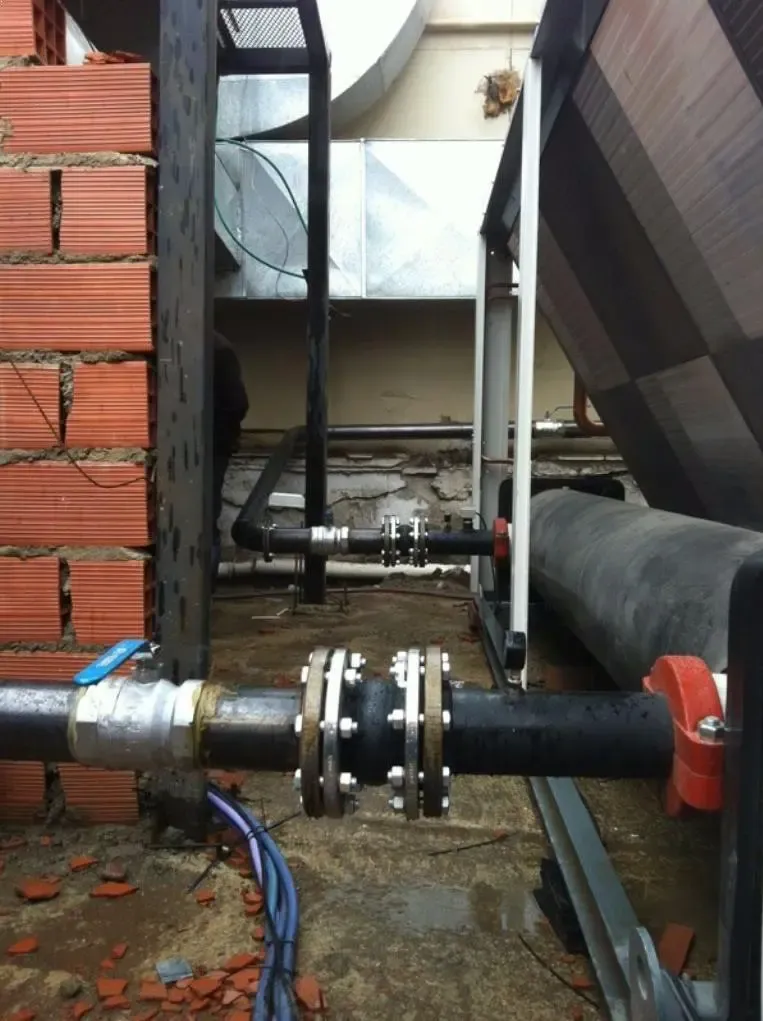
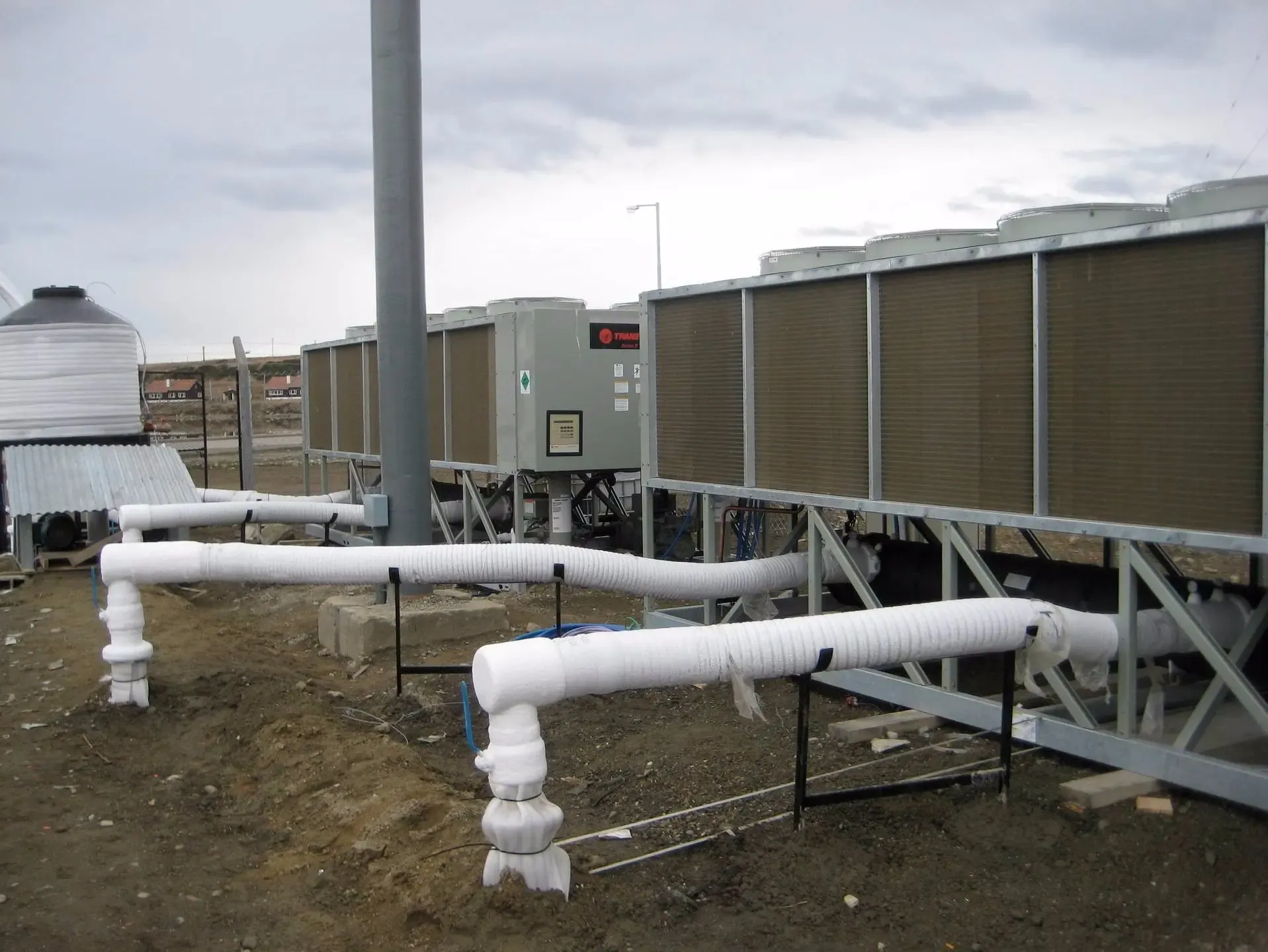
The machinery sits outside, as close to the rink as possible, in an area of about 35 m². The closer it is, the better it performs and the less it consumes. If it has to go further away, we add extra insulation to the pipes so no energy is lost. The chiller needs a three-phase supply with an earth connection.
What is included when you buy a rink
When you buy an ice rink, the chiller is part of the package: aluminium cooling floor, chiller, barriers, commissioning and training for your staff. Transport is extra. Import costs and taxes are paid by the customer. You will find guide prices on ice rinks for sale and on our ice rink prices page.
We have been manufacturing in Cardona (Barcelona) and Buenos Aires since 2006. Occasionally we have chillers refurbished to as-new condition with a warranty, or mobile rinks used only once; ask us if that option interests you.
Maintenance and warranty
- Service every 6 months: oil and refrigerant levels.
- Every 3 to 5 years: inspection of the hydraulic connections.
- Machinery warranty: 1 year, with scheduled maintenance carried out.
- Documentation: machinery manuals and technical data included.
If you prefer, we send a technician to carry out the maintenance. There is more information on ice maintenance.